
What gives walling work proper staying power
Built for the load involved
Retaining work is planned around soil pressure, not treated like simple boundary walling.
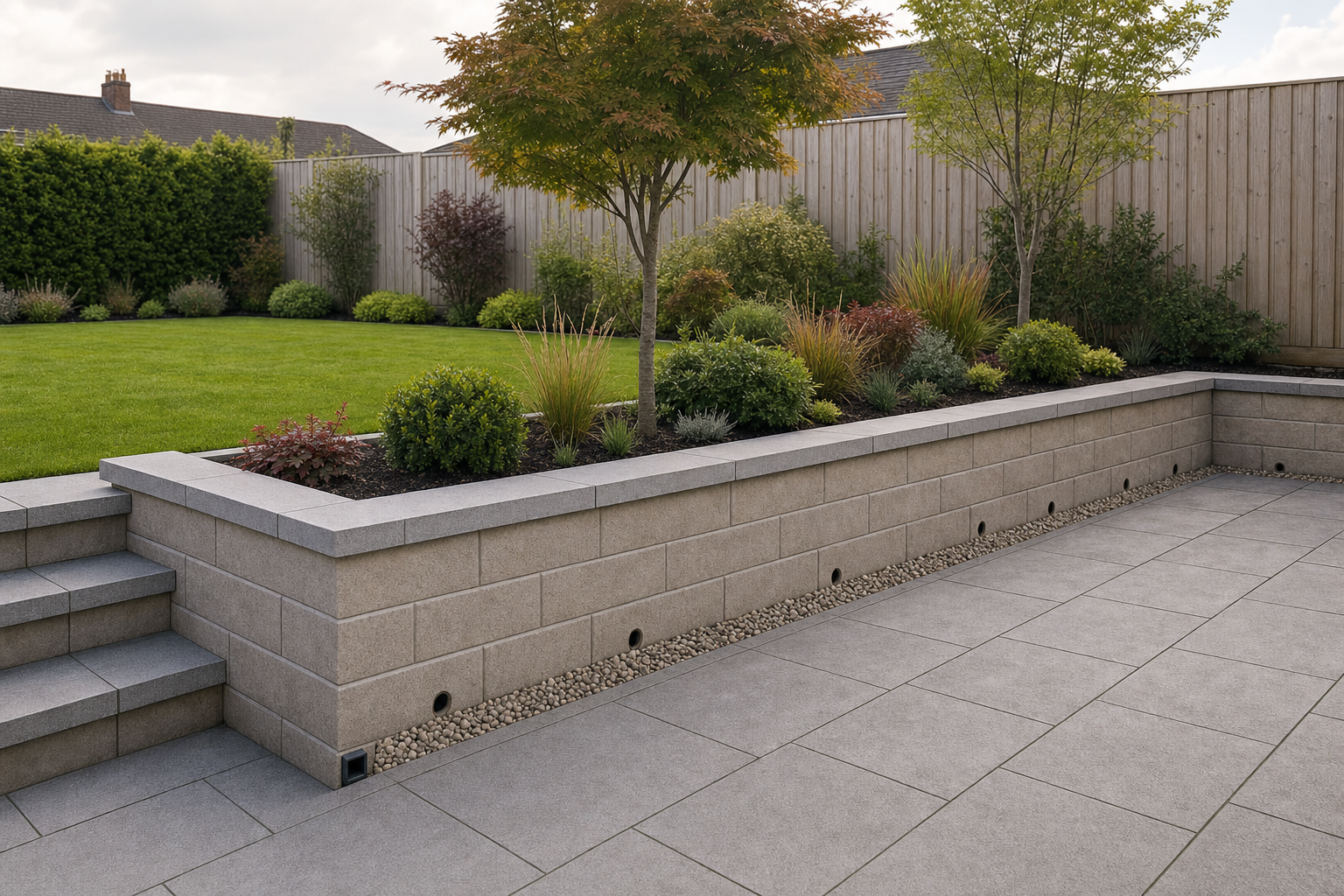
Drainage behind the wall
We factor in water control because trapped moisture can shorten a wall's life.
Finish tied to surroundings
Materials and coping can be chosen to sit neatly with nearby paving and steps.
A retaining wall does a different job from a garden wall
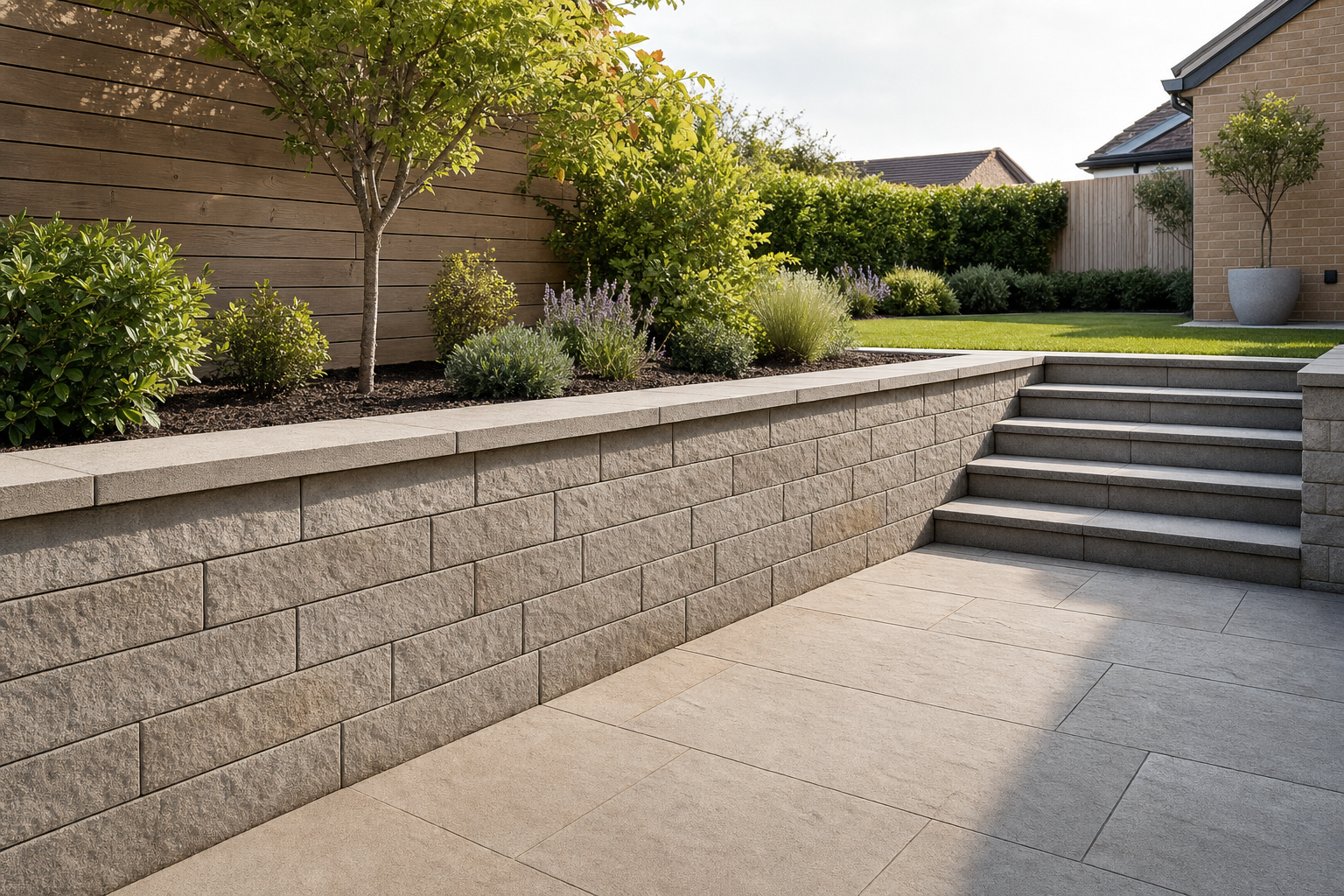
Some walls mainly define a boundary or add structure to a garden. Others are holding back a change in ground level and taking real pressure from the soil behind them. Knowing which job the wall needs to do affects everything that follows, from the foundation to the build method and the finish. We look at wall purpose, height, the pressure behind it and how it meets paving, steps or other surfaces nearby. Our walls are planned as part of the wider outdoor space, so it does not fight the levels around it or look like it was added as a last resort.
Water behind the wall needs somewhere to go
One of the main causes of trouble in retaining work is ignoring drainage. Water pressure building up behind a wall can do serious damage over time, so we plan drainage as part of the construction rather than an afterthought. Excavation, foundation preparation, wall construction, backfilling and surrounding reinstatement all need to work in sequence. A site review with DW Contractors Ltd also lets us talk through materials, coping details and the finish you want, so the wall is doing its job structurally while still fitting the look of the property.
Frequently asked questions
What makes a retaining wall different from a garden wall?
A retaining wall is designed to support ground at a change of level, so it has to cope with pressure from the soil behind it. That affects the foundation, build method and drainage. A decorative or boundary wall may not face those same demands, even if the finished look is similar from the front.
Why is drainage important behind a retaining wall?
Because water builds pressure. If it has nowhere to go, that pressure can weaken or damage the wall over time. Planning drainage behind the wall is one of the practical details that protects the structure long term. It is not an optional extra if the wall is doing a true retaining job.
Can walling be included with wider landscaping work?
Yes, and it often makes more sense to plan it that way. Walls affect levels, paths, patios, steps and drainage, so treating them as part of the same outdoor layout usually gives a cleaner result. It also helps the construction sequence run more smoothly from excavation through to reinstatement and finish.