
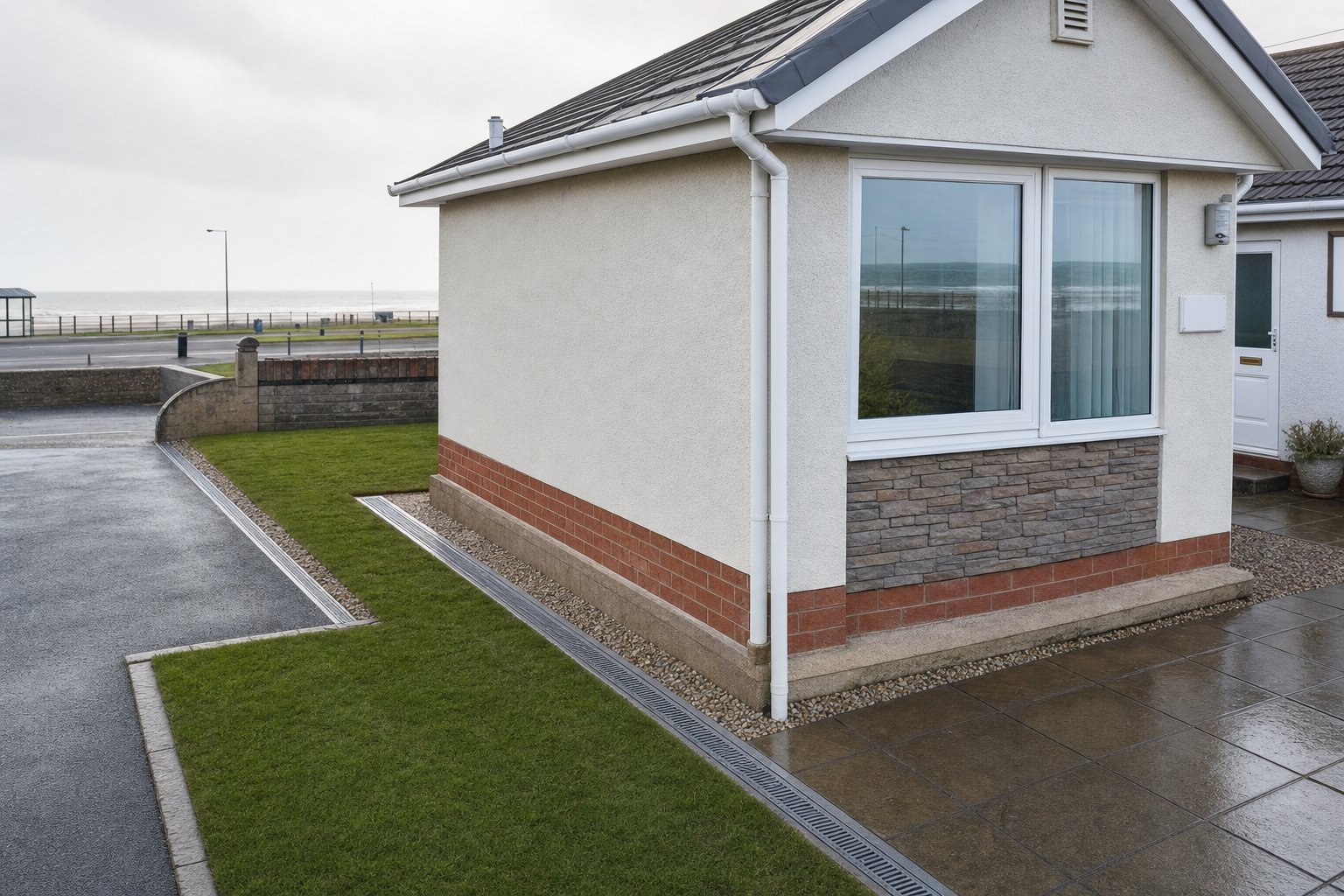
What quality drainage work should deliver
A clear route for water
We look at levels and flow direction before choosing where the drainage should run.
Trenching tied to the site
The route is planned around existing surfaces and the next stage of the project.
Reinstatement considered early
Putting disturbed areas back matters just as much as opening them up safely.
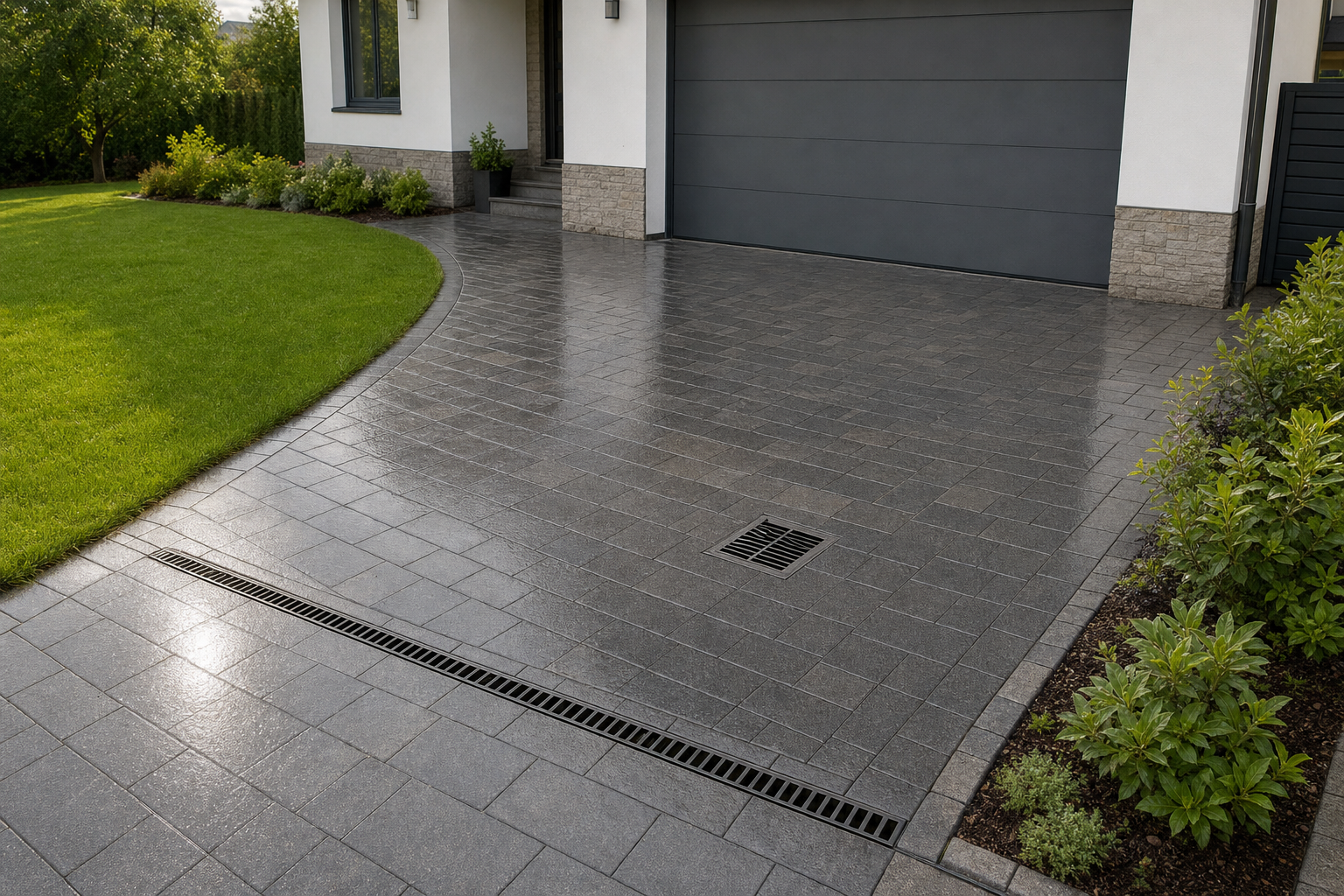
Water problems rarely stay small by themselves
Standing water and poor surface run-off make outdoor spaces harder to use and often point to a bigger issue with levels or drainage routes. We start by looking at how water is moving now, where it is collecting and what surfaces or features are affecting the flow. That planning matters whether the problem sits in a driveway, a lawn edge or a work area waiting for the next stage. With DW Contractors Ltd, the drainage plan is based on the site in front of us, not on assuming every puddle needs the same answer.
In-depth planning and tidy reinstatement
Once the route is set, drainage work depends on careful trench layout, excavation depth, bedding, pipe or channel placement, backfilling and compaction. Just as important is knowing how the disturbed ground or surface will be put back together afterwards. A site visit with DW Contractors Ltd helps us coordinate drainage before a driveway, patio, lawn or foundation is completed, which is usually far easier than cutting back into finished work later. Done properly, trenching should solve a problem, not leave you with a fresh one.

Frequently asked questions
When should drainage be installed on a project?
Ideally before the final surface is completed. Drainage affects falls, edges and the way a driveway, patio or lawn will perform, so it is usually better planned into the job from the start. Retrofitting it afterwards can mean cutting into work that could have been left untouched with earlier coordination.
Will trenching damage the surrounding surfaces?
Any trenching work disturbs the ground, but the aim is to plan the route carefully and reinstate the affected areas properly afterwards. We look at where access is needed, what surfaces are nearby and how the trench will be closed back up, so the finished area is not left looking as though it has been dug through carelessly.
How do you decide where the water should go?
We assess levels, flow direction, low spots and the wider site conditions before setting the route. The answer depends on how the ground works and what the surrounding surfaces are doing. A drainage plan should follow the logic of the site, not force water into a route that does not really suit the area.